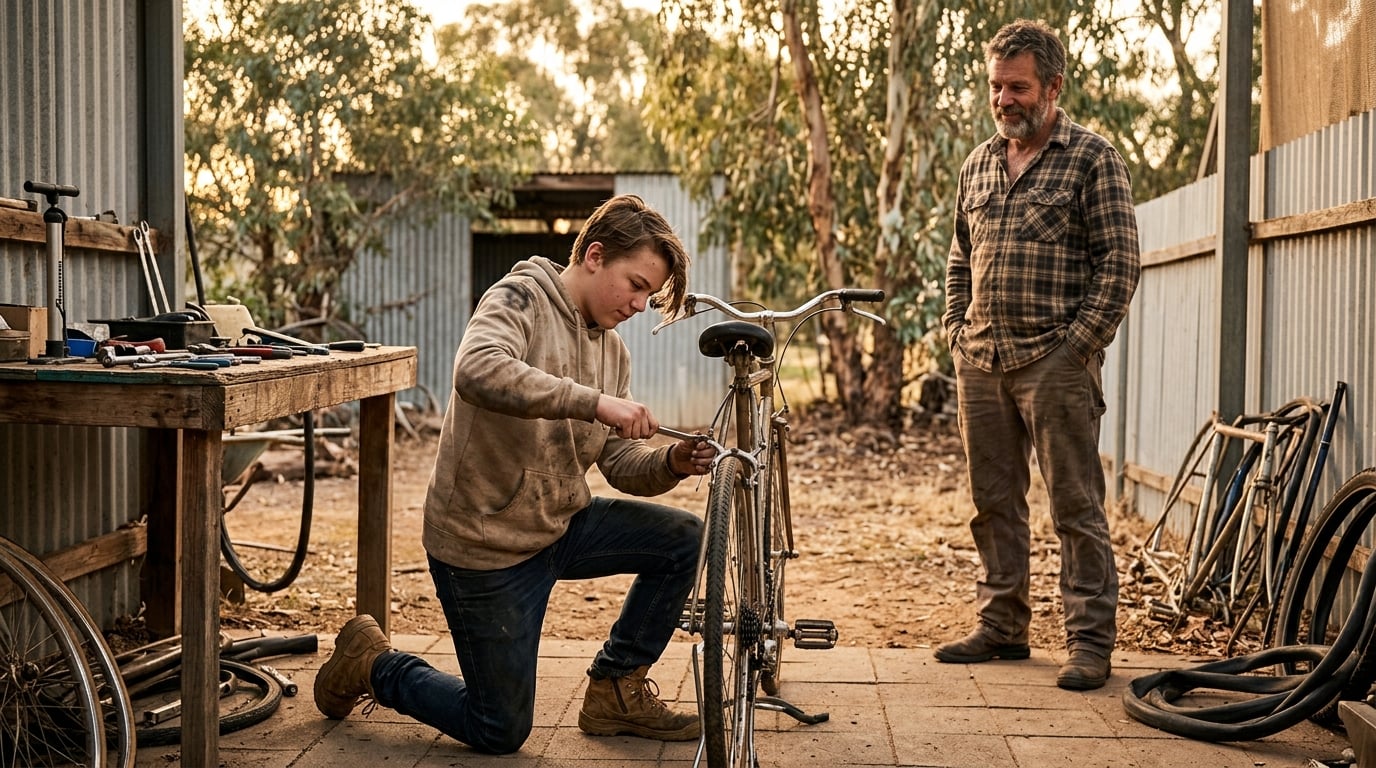
This is a composite example drawn from common patterns in practice. It does not describe one identifiable young person or family.
When a young person is withdrawing, refusing support, missing school, or becoming increasingly difficult to engage, it is understandable that the people around them want answers quickly.
Families may feel worried and exhausted. Staff may feel they have tried every strategy available. Services may be concerned about risk, participation, education, relationships, or the young person’s future.
This article is for: families, carers, support coordinators, educators, youth workers, and organisations supporting children and young people experiencing disengagement, change, or complexity.
Often, the question becomes:
“How do we get this young person to engage?”
It is an important question. But it is rarely the best place to begin.
Before we can expect a young person to engage, participate, learn, or adapt, we need to understand the social conditions shaping their life.
The following is a composite example. It does not describe one individual. It reflects patterns I have seen across many years of work with young people, families, schools, and services.
Meet Jayden
Jayden was 15 when the adults around him began to describe him as “disengaged”.
He was attending school irregularly. He had stopped going to a youth programme he had previously enjoyed. He spent most of his time in his room, often online. When adults raised concerns, he would either say very little or become angry.
Jayden’s mother was worried. She knew he had once been interested in sport and enjoyed spending time with a cousin. But those connections had become less regular. School staff were focused on attendance. Support workers were trying to encourage him to get out into the community. Everyone wanted to help.
Yet Jayden seemed to be moving further away.
There were plans, meetings, messages, and suggestions. But no shared understanding of what was happening beneath the visible behaviour.
The risk was that Jayden would become known only through the problems others could see:
- not attending;
- not responding;
- not participating;
- refusing support; and
- becoming angry when pressured.
A Human Flourishing Profile™ begins in a different place.
It asks not only what a young person is doing, but what their experiences may be telling us about the conditions around them.
Modern Pressures: What was Jayden carrying?
Jayden’s life was not quiet or simple.
His family had recently moved because of housing pressures. He had changed schools. His mother was managing financial stress and long work hours. Jayden was also navigating friendship changes, online conflict, and the constant social comparison that can come with social media.
None of these pressures alone explained everything. Together, they created a level of strain that had not been fully recognised.
From the outside, staying in his room and avoiding school looked like disengagement.
From Jayden’s perspective, it was one of the few places where he felt he could reduce the demands being placed on him.
Recognising Modern Pressures did not mean lowering expectations for Jayden. It meant understanding that he was already carrying more than many people realised.
The question shifted from:
“Why will Jayden not come out of his room?”
To:
“What pressures is Jayden managing each day, and what would make those pressures more manageable?”
Adaptation to Change: Too much had changed too quickly
The move had meant more than a new address.
Jayden had lost familiar routines, a local sporting connection, regular contact with peers, and the school staff who had known him for several years. The new school had different expectations. The youth programme was now harder to reach. His support worker had also changed.
For adults, these may have appeared to be separate events. For Jayden, they were a series of losses and adjustments occurring close together.
Adaptation to Change is one of the eight elements of the Schultz Human Flourishing Model™ because change affects how people make sense of themselves and their place in the world.
Young people are often expected to adjust quickly. They may hear that a move, new school, or new service is “a fresh start”. But they may still be grieving what was familiar, questioning whether new relationships will last, and trying to understand what is expected of them.
Jayden did not need adults to push him more quickly into new activities. He needed enough consistency and predictability to begin adapting.
A practical starting point was to reduce the number of new demands at once. One trusted adult became his regular point of contact. School communication was simplified. He was given a gradual pathway back into learning rather than being expected to manage a full return immediately.
The Individual/Self: Who was Jayden beyond the concerns?
When a young person has been struggling for some time, it is easy for adults to speak mainly about what they are not doing.
Jayden was not attending. Not engaging. Not communicating. Not taking opportunities.
But that was not the whole story.
When the conversation slowed down, Jayden spoke about enjoying practical work. He liked repairing bicycles with his uncle. He was knowledgeable about sports statistics. He had a dry sense of humour. He cared deeply about his younger sister, even if he did not show it in obvious ways.
These details mattered.
The Individual/Self invites us to look beyond a young person’s file, behaviour, support needs, or history of service involvement. It asks who this person is, what matters to them, what strengths they have developed, and how they see their own future.
Jayden had begun to see himself as the young person who disappointed people. He expected adults to focus on what had gone wrong.
Rebuilding participation required a different experience: being seen as someone with interests, capacity, and something to contribute.
Values: What mattered to Jayden?
Values shape the way young people understand trust, care, fairness, respect, responsibility, and relationships.
Jayden often said that adults “did not listen”. At first, this could have been dismissed as resistance. But it pointed to something important.
He valued being spoken with honestly. He disliked being told about decisions after they had already been made. He wanted adults to stop making promises they could not keep.
For Jayden, trust had been affected by changes in workers, disrupted relationships, and plans that had not always happened as described.
A values-based response did not mean Jayden controlled every decision. It meant adults were clear, respectful, and honest. If something could not be done, they explained why. If a plan changed, Jayden was told early. If he disagreed, there was space to hear his view.
Small changes in how adults communicated began to matter.
Community: Finding a place to participate
Earlier attempts to support Jayden’s community participation had focused on getting him to join general youth activities.
He declined.
However, when adults explored what was meaningful to him rather than simply what was available, they learned that Jayden still enjoyed practical work. Through a local connection, he began attending a community bicycle workshop once a week with his uncle.
At first, he did not want to speak much with anyone. He preferred to work quietly. But he returned the following week.
Over time, he began helping younger participants repair tyres and adjust brakes. He did not suddenly become highly social or confident. That was never the expectation.
But he had a place where his knowledge was useful and where his participation had a purpose.
This is the importance of Community. It is not simply being present at an activity. It is having opportunities to participate in ways that are relevant, manageable, and meaningful.
Life-Long Learning: Building skills through real experience
Jayden’s pathway was not about completing a programme and being “fixed”.
It was about learning over time.
At the bicycle workshop, he practised arriving at a set time, working alongside others, asking for tools, explaining what he knew, responding when something went wrong, and leaving when the session finished.
These may sound like small things. But they are real learning experiences.
Life-Long Learning reminds us that confidence and capability develop through repeated opportunities to try, reflect, adjust, and try again.
Jayden’s participation grew because adults did not expect instant readiness. They recognised that learning happens through lived experience, not simply through instruction.
Culture: Understanding the environments around him
Culture includes the shared expectations, practices, histories, and ways of relating that shape a young person’s life.
Jayden was navigating several different cultures: his family culture, the culture of his new school, online peer culture, youth-service culture, and the practical, hands-on culture of the bicycle workshop.
At school, he felt that adults mainly noticed what he was not doing. At the workshop, he experienced a different culture. People valued practical knowledge, patience, and helping others learn.
This did not mean school was unimportant. It showed that Jayden responded differently in environments where he could see how he fit and what he could contribute.
Understanding Culture helped the adults around him consider how school and support settings might create more opportunities for Jayden’s strengths to be recognised.
Moral Thinking: Learning through responsibility and repair
Jayden still had difficult days. There were arguments at home and times when he did not attend school as planned.
A flourishing approach does not ignore behaviour or avoid accountability.
Moral Thinking concerns how young people develop an understanding of fairness, responsibility, care, consequences, and the effect of their actions on others.
Rather than responding only with punishment or pressure, adults worked with Jayden to reflect on what had happened.
Who had been affected? What had he been trying to communicate? What could he do differently next time? Was there a way to repair a relationship or make a more respectful choice?
This approach held Jayden accountable while also treating him as a young person capable of learning, reflection, and growth.
What changed around Jayden
Jayden did not need adults to lower their hopes for him. He needed the people around him to understand his experience more fully and respond with greater consistency.
The practical changes were modest but important:
- one reliable adult contact;
- fewer competing demands during a period of adjustment;
- a gradual pathway back into learning;
- a community setting connected to his real interests;
- opportunities to contribute practical knowledge;
- honest communication and shared expectations; and
- support to reflect on conflict, responsibility, and repair.
These actions became clearer once the adults around Jayden understood how the eight elements were interacting in his life.
A more coherent way forward
Jayden’s story did not change overnight.
He still faced pressures. He still needed support through transitions. School attendance did not become perfect. His family continued to manage real challenges.
But the conversation around him changed.
Instead of viewing Jayden only as a young person who would not engage, the people around him developed a shared understanding of how Modern Pressures, Adaptation to Change, Values, Community, Life-Long Learning, The Individual/Self, Culture, and Moral Thinking were interacting in his life.
This created a more practical pathway.
The goal was not to make Jayden fit someone else’s idea of success. It was to strengthen the conditions that allowed him to participate in ways that were meaningful, sustainable, and connected to who he was.
The Human Flourishing Profile™ is a non-diagnostic, strengths-based process that helps families and professionals build this kind of shared understanding. It complements clinical, therapeutic, functional, behavioural, statutory, educational, and NDIS processes by bringing the social conditions around a young person into clearer view.
When a young person seems disconnected, the answer is not always more pressure.
Sometimes the first step is to understand what their experience has been trying to tell us.